
Ferritin: a window into iron stores
What ferritin tells us, why one value is not enough, and how iron fits into the picture.

Key takeaway
Ferritin helps assess iron stores. The result makes sense alongside your health history and other tests.
Iron and ferritin have different roles
Iron is a mineral the body uses to make haemoglobin, the protein that carries oxygen in the blood. Ferritin is a protein that stores iron. The blood test measures ferritin and helps assess iron reserves.
Why the result needs context
Low ferritin may indicate iron deficiency. A high value can reflect excess iron, but also inflammation or liver problems. High ferritin therefore does not automatically prove that the body has too much iron.
A clinician may interpret it alongside haemoglobin and other markers. The test provides information; it does not establish the cause of a symptom on its own.
Low iron stores and anaemia are not the same thing
Iron stores can fall before haemoglobin declines. Haemoglobin within the reference range therefore does not, by itself, rule out low stores. Ferritin and the blood count provide complementary information, interpreted alongside your health circumstances.
When deficiency is confirmed, its cause also matters: diet, blood loss or poor absorption may play a part. Mention heavy periods, digestive concerns and the medicines you use. Your clinician determines which investigations or treatment are needed; ferritin alone cannot reveal the source.
Where the body gets iron
Iron is found in meat, seafood, legumes and some fortified foods. Absorption varies by source: vitamin C helps the body absorb iron from plant foods.
Supplements are not harmless simply because they contain an essential mineral. Too much iron can be harmful, so its use needs a clear reason.
Before the test
Preparation may include a fasting requirement. Confirm the instructions for the tests you will have together and tell the laboratory which medicines or supplements you take.
Sources
- Iron — Fact Sheet for Health Professionals · Iron Deficiency ↗NIH · Office of Dietary Supplements · Accessed 15 September 2026
- Iron-Deficiency Anemia ↗NIH · National Heart, Lung, and Blood Institute · Accessed 15 September 2026
- Ferritin Blood Test ↗MedlinePlus · National Library of Medicine · Accessed 5 September 2026
- Iron — Fact Sheet for Consumers ↗NIH · Office of Dietary Supplements · Accessed 5 September 2026
An editorial explanation referring to the listed sources. General information; individual interpretation and treatment require clinical assessment.
Updated 15 September 2026. How we prepare our content
You may also like
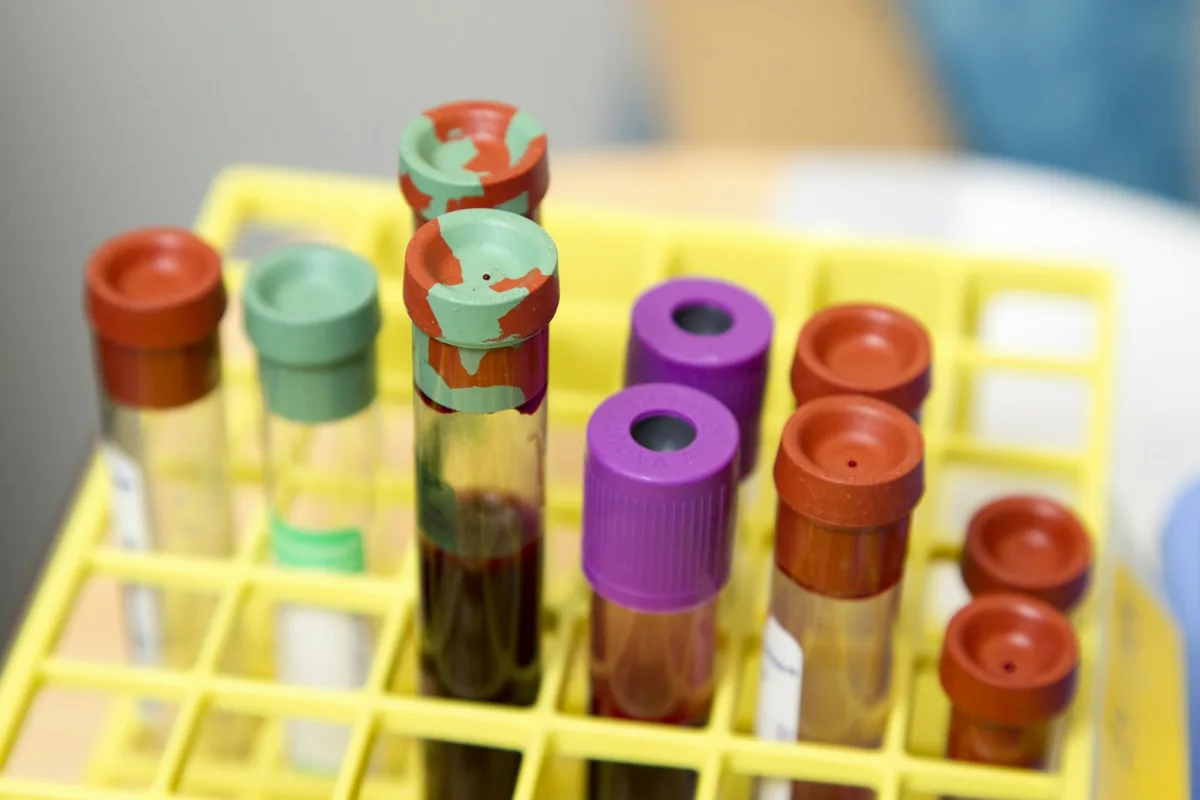
Understand your tests
HbA1c: a view of glucose beyond today
The difference between a current glucose reading and HbA1c, preparation, and why context matters.
Everyday health
From your visit to your results: how Anna Maria Lab works
Walk-in visits, with clear information about hours, payment and receiving results.
Understand your tests
Hidden blood in stool: what FIT and gFOBT can tell you
How the two methods differ, why preparation depends on the kit, and what positive and negative results mean.
Looking for a specific test?
Find the information you need or check how to prepare before your visit.